



India’s demonetization and the future
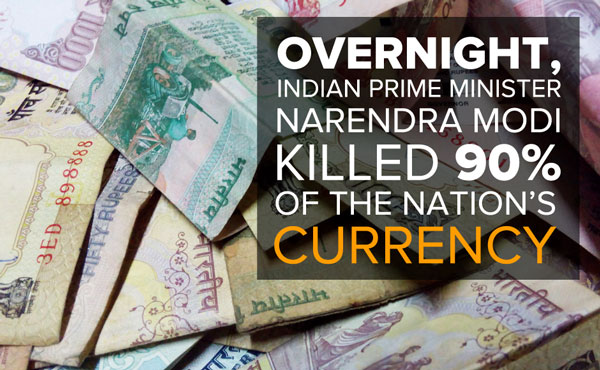
When I woke up on Nov. 8, I had a message from my mother — it was a link to an article about how to exchange Indian currency notes now that the Rs. 500 and Rs.1000 notes were no longer legal tender. I didn’t click on the article — I assumed this was the kind of Whatsapp forward that I’m used to getting— the kind that usually start with “Post this as your status so Facebook can’t sell your data …” — and instead started reading the news for the day. And between articles about America’s big election day, I stumbled across articles which ranged from shocked to incredulous to outraged, all saying that Narendra Modi, India’s prime minister, had demonetized the two most common denominations of currency, an estimated 86 percent of cash in circulation, in a country where about 90 percent of transactions happen in cash.
Modi announced that citizens could deposit their money at banks or post offices or had until Dec. 30 to exchange their notes at banks — and that amounts larger than a certain threshold increase in income would require an explanation.
I was dumbstruck — I couldn’t wrap my head around how big of a move this was and all the implications it would have. The change was undertaken to tackle the problem of black money, terrorism and the informal economy that escapes taxation by bringing the cash holdings of citizens into the banking system, where it couldn’t easily avoid detection, and by making the cash that didn’t enter the system essentially useless. And it seemed so simple and bold and brilliant.
But this was happening in India — and I had to ask, could the government really pull it off?
Read Full Article – http://www.stanforddaily.com/2016/12/02/indias-demonetization-and-the-future-2/


About Post Author
